Retail uniform programmes for client advisors, hosts and store teams
One store wardrobe for every role, format and country. Developed, sampled and produced in Portugal and Europe.

Client advisor at the boutique counter. Illustrative concept.
The uniform stands next to the collection
A store uniform is worn beside the product it sells, in front of clients who photograph everything. It has to be recognisably the brand without being a piece a client could buy, and look the same in the fourth country and on last month’s starter.
Most retail directors inherit a jacket bought locally, a knit swapped, a network that no longer reads as one brand. A programme replaces that with one wardrobe matrix of roles, formats, countries and seasons, documented so later runs are produced to the launch specification.
One language across every role.
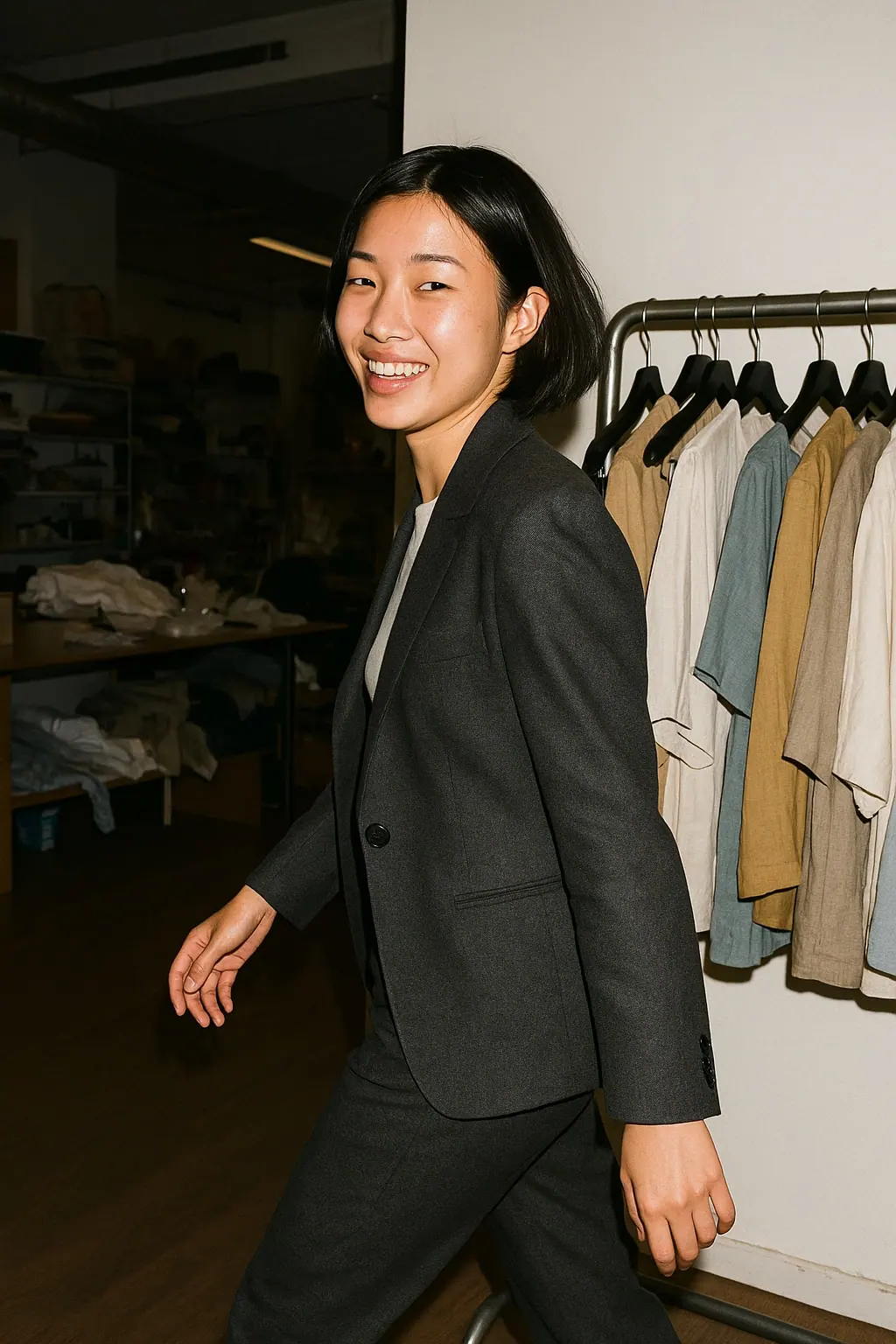
Client advisor
The role clients see most. A full shift between display, fitting room and stockroom, still sharp at closing.
Jacket · Trousers or skirt · Dress · Shirt or blouse · Fine-gauge knit · Scarf or pocket square
Boutique host
At the flagship door, in and out of the street climate all day. Outerwear belongs to the programme, not to a local shop.
Coat · Jacket · Dress · Trousers · Shirt or blouse · Scarf
Store and floor managers
Private appointments and the visit from head office. The floor’s codes with a clear step in cloth or construction.
Jacket · Trousers or skirt · Dress · Shirt or blouse · Knit layer · Coat
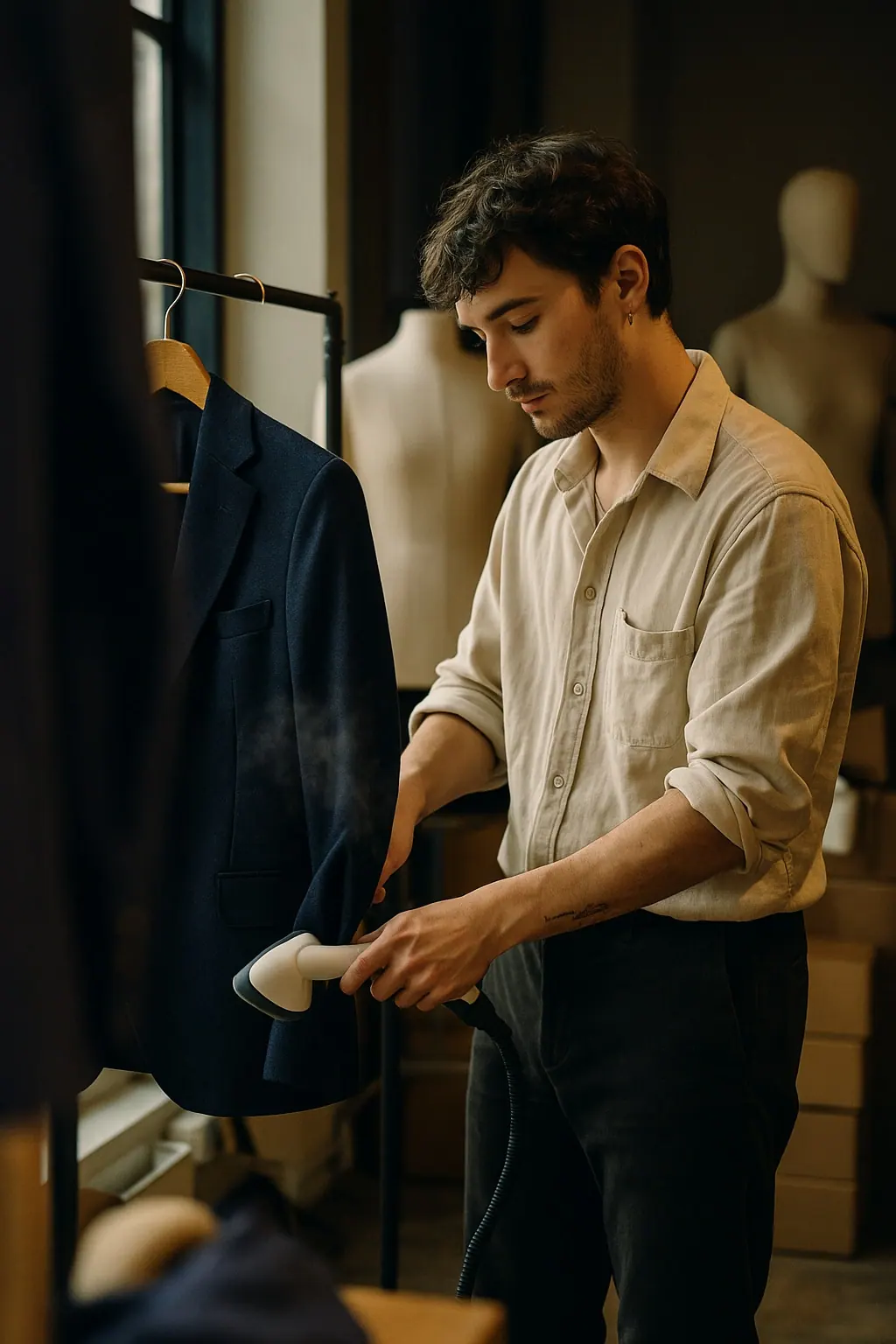
Visual merchandiser
Dresses windows and moves product during trading hours, so is seen more than the title suggests. The same colour story in practical cuts.
Overshirt or soft jacket · Trousers · Knit polo · T-shirt or fine knit · Apron where needed
Client-facing back of house
Stockroom and after-sales staff who step onto the floor with a size or a repair, dressed from the quieter end of the same wardrobe.
Overshirt · Trousers · Knit polo · Fine knit · Apron


Developed as one wardrobe.
- Tailoring
- Jackets · Trousers · Skirts · Dresses
- Shirting and knitwear
- Shirts · Blouses · Fine-gauge knits · Cardigans · Knit polos
- Modern casual
- Overshirts · Soft jackets · T-shirts · Relaxed trousers
- Accessories
- Scarves · Pocket squares · Neckwear · Belts
Operating conditions
Coherence with the collection
We work from your palette, proportions and finishes, and keep the wardrobe one step quieter than the pieces on the rail.
Consistency across the network
Colour, cloth and construction are specified at sampling and carried into later runs, so the twentieth store is dressed to the same specification as the first.
Turnover, openings and the collection calendar
The matrix can carry a permanent core and a seasonal layer, so starters, mid-season openings and a refreshed knit are planned rather than improvised.
Floor conditions
Full shifts standing, kneeling at cases and lifting in the stockroom, under lighting that shows every crease. Cloths are chosen for crease recovery and repeated laundering.
How a store programme runs
- 01
Brief, store formats and wardrobe matrix
Roles are mapped against store formats, countries and seasons into one document shared by brand, retail operations and procurement.
- 02
Development and sampling beside the collection
Garments are developed from your brand codes and sampled, then reviewed next to current product so the wardrobe sits with the collection without being mistaken for it.
- 03
Production by store and season
Production is planned by role, store and season, with every garment documented so later runs for openings and starters are produced to the launch specification.
The process, in short
Retail moves on a collection calendar, so the programme is planned against it: the permanent core first, then any seasonal piece decided early enough to be sampled and approved before the window changes. Each stage closes with a clear approval before the next begins.
Each stage closes with a clear approval before the next begins.
The eight stages, from brief to deliveryQuestions retail buyers ask.
How do you keep the uniform from competing with the product on the rail?
By starting from your brand codes rather than your collection, and reviewing samples beside current product so nothing looks like a piece a client could buy.
Can store managers be distinguished from client advisors without a second uniform?
Yes. A change of cloth, a contrast detail or one additional piece inside the same wardrobe family usually does it, and the store still looks like one team.
What happens when a new store opens mid-season or a starter joins?
Every garment is documented at launch: cloth, colour standard, construction and grading. Later runs are produced to that specification and planned against your opening calendar.
Can visual merchandisers and stockroom teams be dressed in the same programme?
Yes, where clients see them, from the practical end of the same colour story: overshirts, knit polos and trousers rather than the advisor’s jacket.
Does the programme cover footwear and bags?
No. We develop and produce apparel and textile accessories. Footwear and leather goods sit outside the programme, and we say so at the brief.
Planning a store uniform programme?
Tell us about the roles to dress, your store list by country and format, approximate numbers and target date.
- We read it and ask what is missing.
- We propose a route and what to expect next.
- No mailing list, no automated follow-up sequence.