Restaurant uniform programmes for front of house and bar teams
Host, waiting, bar and floor management wardrobes in one brand language, built for the pass, the terrace and the nightly wash.

Floor server pouring water during service. Illustrative concept.
A dining room uniform is washed more often than it is noticed
A restaurant uniform is worn through a double shift, brushed against the pass, splashed at the bar and washed that night so it can go out again tomorrow. Guests rarely see it consciously. They notice when the apron has faded, the collar has gone soft or the host is in a different navy from the waiter.
The problem is rarely one garment. It is keeping five roles, two services a day and a second or third venue in the same brand language as staff join and leave. That is a programme, not an order of shirts.
One language across every role.
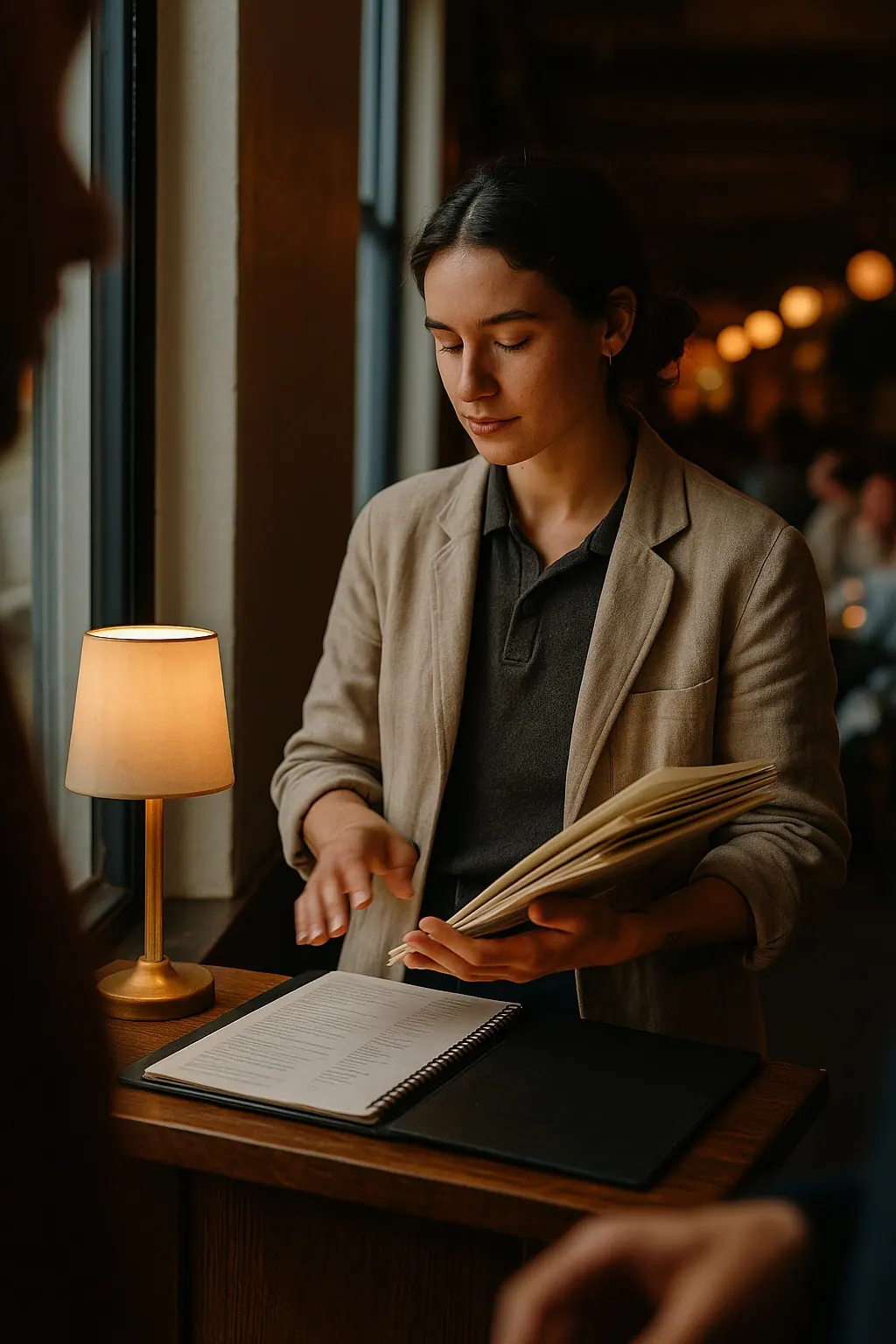
Host and reception
The first face at the door and the last on the way out. Dressed a step above the floor, often in the dress or tailored piece of the wardrobe, and still able to walk the room all evening.
Dress or tailored jacket · Trousers or skirt · Shirt or blouse · Fine-gauge knit · Scarf or neckwear
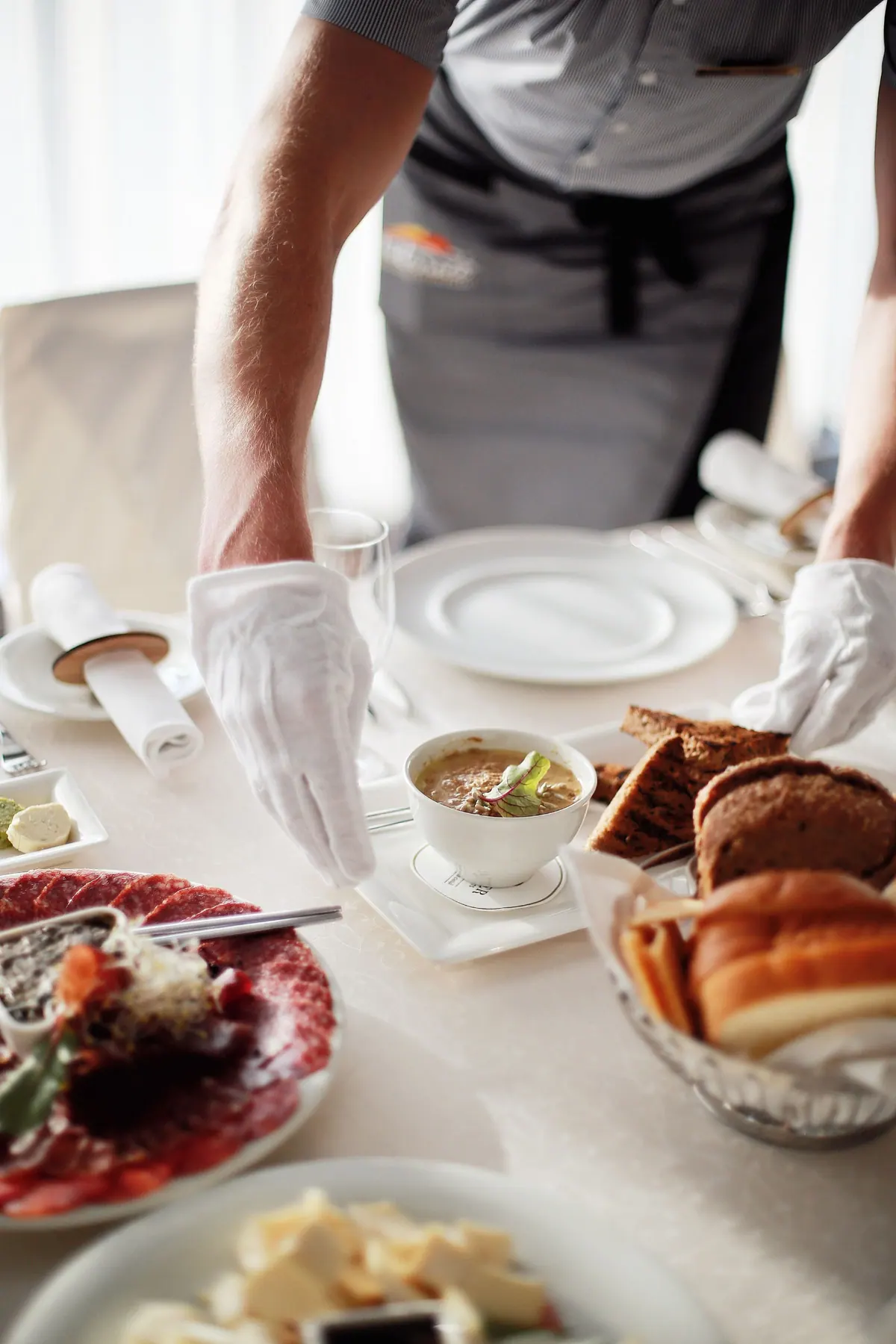
Waiting staff
Carrying, clearing, bending to tables and passing the kitchen door dozens of times a service. Needs ease of movement, a cloth that recovers from heat and washing, and an apron that does real work.
Shirt or polo · Trousers · Bib or waist apron · Waistcoat · Knit layer · Belt
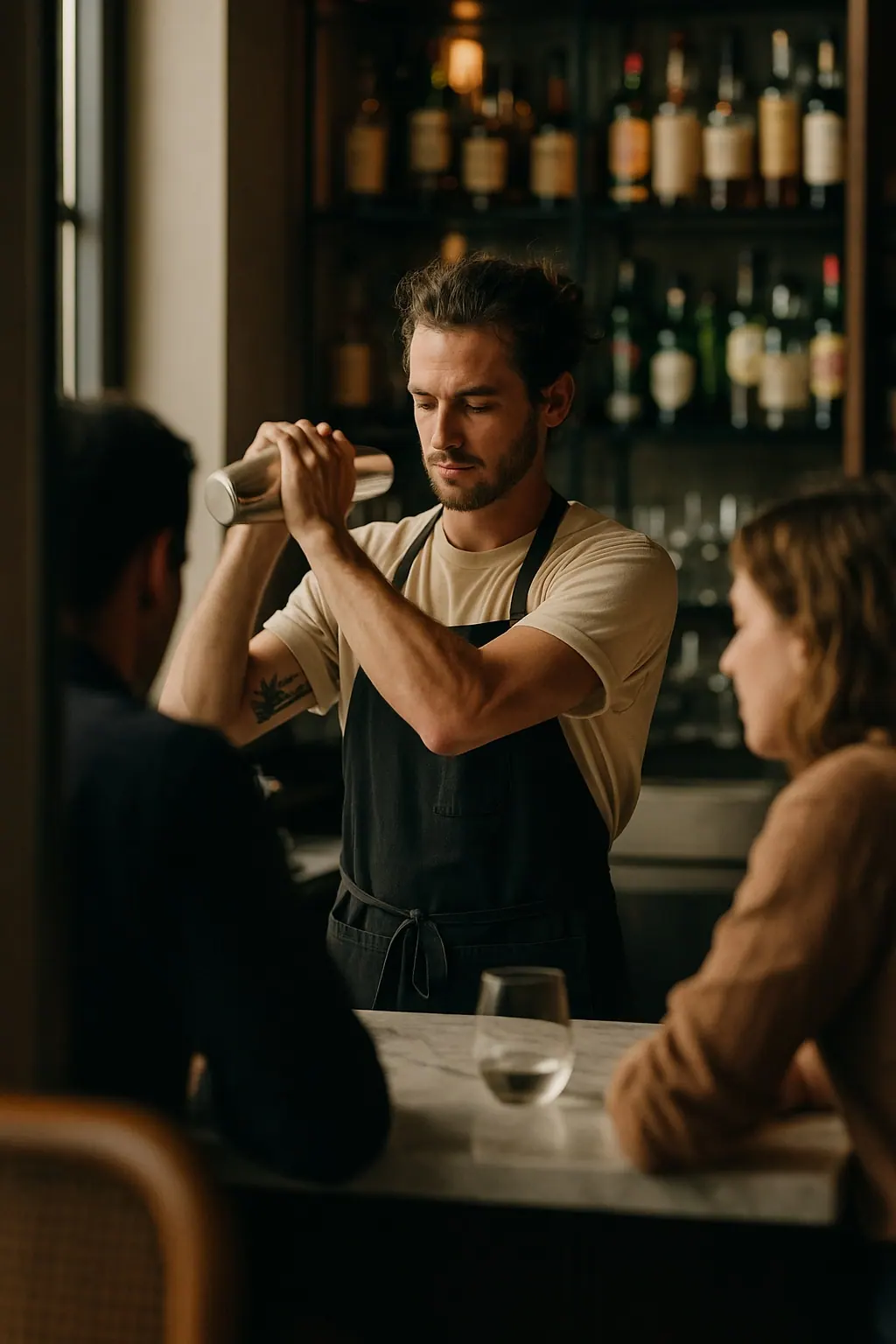
Bartenders
Behind the bar in heat and spray, with sleeves rolled, cuffs that get wet and a silhouette seen from the waist up for most of the night.
Roll-sleeve or short-sleeve shirt · Waist apron · Waistcoat · Trousers
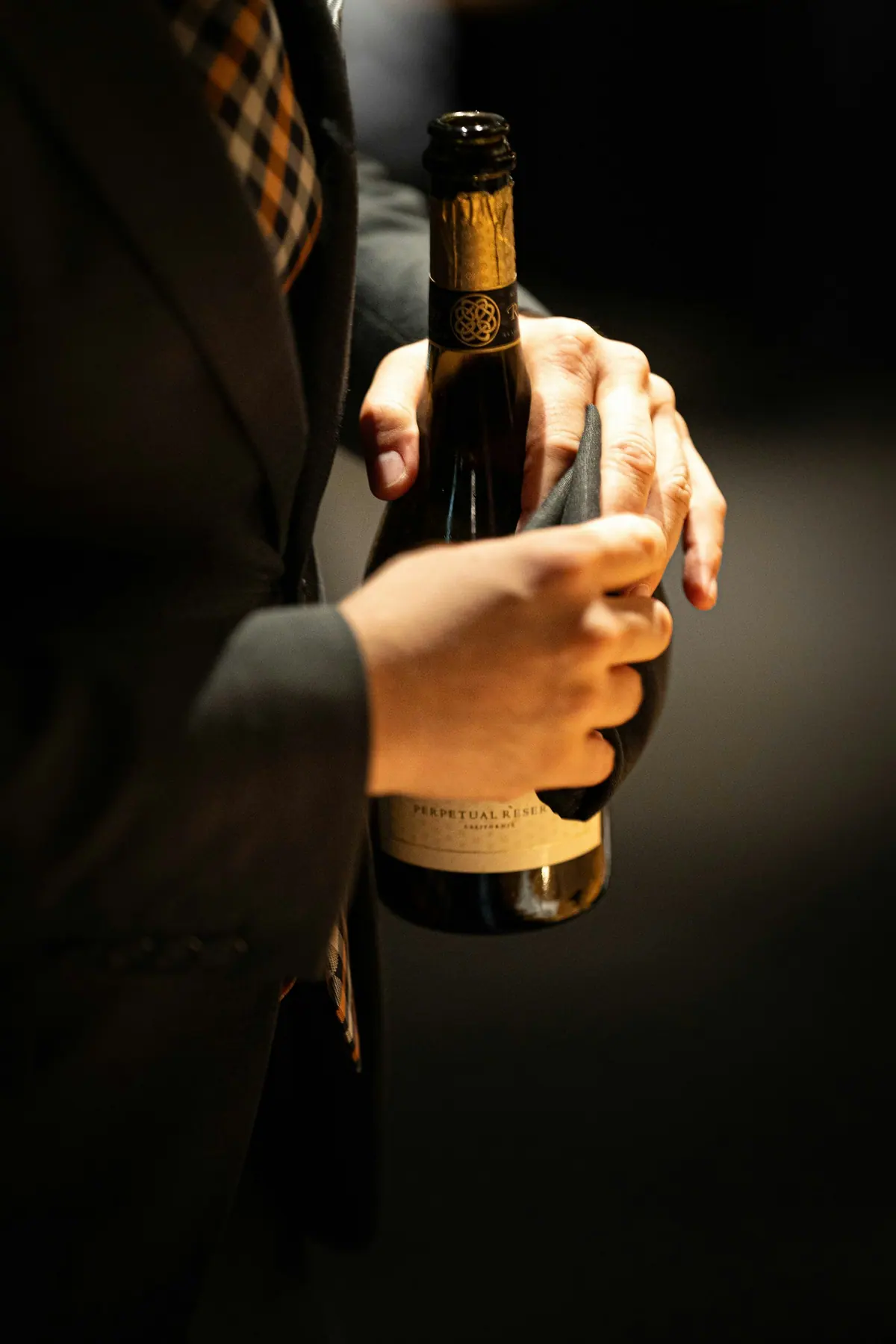
Sommelier and head waiter
The senior presence on the floor. Same colour story as the waiting team, with a visible step up: a jacket, a different cloth or a dedicated long apron rather than a separate uniform.
Jacket · Shirt · Trousers · Sommelier apron · Tie or neckwear · Waistcoat

Floor and service managers
Running the room, greeting regulars and clearing a table when it matters. Reads as management and as part of the same team, without the apron.
Jacket or soft blazer · Shirt or blouse · Trousers or skirt · Knit layer · Belt


Developed as one wardrobe.
- Shirting and tops
- Shirts · Blouses · Knit polos · Short and roll-sleeve shirts
- Aprons
- Bib aprons · Waist aprons · Sommelier and long aprons · Bar aprons
- Tailoring
- Jackets · Waistcoats · Trousers · Skirts · Dresses
- Layers
- Fine-gauge knits · Cardigans · Lightweight terrace layers
- Accessories
- Ties and neckwear · Scarves · Belts
Operating conditions
Heat from the pass
Every trip to the kitchen door is a blast of heat. Cloths are selected to stay comfortable and hold their shape through a full service, and reviewed on real samples, not on a swatch card.
Spills and nightly washing
Wine, sauce and bar spray are part of the job, and the garment goes in the wash that night. Colour, cloth and construction are specified with nightly laundering in mind, so the wardrobe is designed to age together rather than one shirt at a time.
Aprons and layering
The apron is where most of the brand lives on the floor. It is developed as a garment in its own right, with the shirt and waistcoat under it planned so the layers read as one outfit from host stand to bar.
Split shifts and terraces
A summer lunch on the terrace and a winter evening service ask different things of the same team. The matrix carries short-sleeve and lightweight options alongside knits and jackets, in one colour story.
Several venues, one brand
A group with a bistro, a bar and a fine dining room can share one wardrobe family with a different mix per venue, so a guest moving between them recognises the same house.
How a restaurant programme runs
- 01
Roles, venues and services
We map hosts, waiting, bar, sommelier and management against garments, venues and service types. The matrix becomes the shared document for your operations and brand teams.
- 02
Development and sampling
Cloth, apron construction and fit are developed for each piece and sampled so decisions are made on real garments. Each stage closes with a clear approval before the next begins.
- 03
Production and repeat orders
Production is planned by venue and role, with the specification documented so new joiners and later runs are produced to the same reference as the first.
The process, in short
This page covers front of house: the host stand, the floor, the bar and the people who run them. Chef whites and kitchen garments are a different discipline with different requirements. If a brief includes them, we will say clearly what sits inside the programme and what would need to be discussed separately.
Each stage closes with a clear approval before the next begins.
The eight stages, from brief to deliveryQuestions restaurants & bars buyers ask.
Do you produce restaurant and bar staff uniforms?
Yes. We develop and produce front of house wardrobes for restaurants, bars and restaurant groups: shirting, aprons, tailoring, knit layers and accessories, in Portugal and Europe. Share your roles, venues, approximate team size and target date and we will tell you what is realistic.
Can the same wardrobe work for a bistro and a fine dining room in one group?
That is what the matrix is for. One cloth family and colour story, with a different mix per venue: a polo and waist apron in the bistro, a shirt, waistcoat and long apron in the dining room. The house reads the same, the formality changes.
How does the uniform survive nightly washing?
Cloth, colour and construction are chosen with daily laundering as the starting point, not an afterthought. We will also say plainly where a finish or colour is unlikely to hold up to that routine.
Do you cover chef and kitchen uniforms?
This programme is for front of house. Kitchen garments have different requirements and are not part of the standard scope. If your brief includes them, raise it at the start and we will say clearly what can be discussed and what cannot.
We open new venues and hire through the year. How do later orders stay consistent?
The full specification (cloth, colour, trims and construction) is documented at the end of development, so a later run for a new site or new joiners is produced to the same specification, subject to material availability and any agreed updates.
Planning a restaurant uniform programme?
Tell us about your venues, roles, approximate team size and target date.
- We read it and ask what is missing.
- We propose a route and what to expect next.
- No mailing list, no automated follow-up sequence.