Corporate and venue uniform programmes for reception, hosts and event teams
Office and reception uniforms for head offices, members’ clubs, cultural venues, conference centres and stadium hospitality: one wardrobe across every role and site.

Receptionist at a head-office lobby desk. Illustrative concept.
The reception desk is the first thing a visitor reads
A head office, a members’ club or a concert hall is judged in the first thirty seconds, and most of that judgement lands on the people at the desk, the door and the box. Their uniform has to read as the building and last a twelve-hour shift.
The same organisation often runs a formal head office, a relaxed client floor and a stadium box on match day. A programme gives every role one language, with the formality set by cloth and detail rather than a separate uniform.
One language across every role.
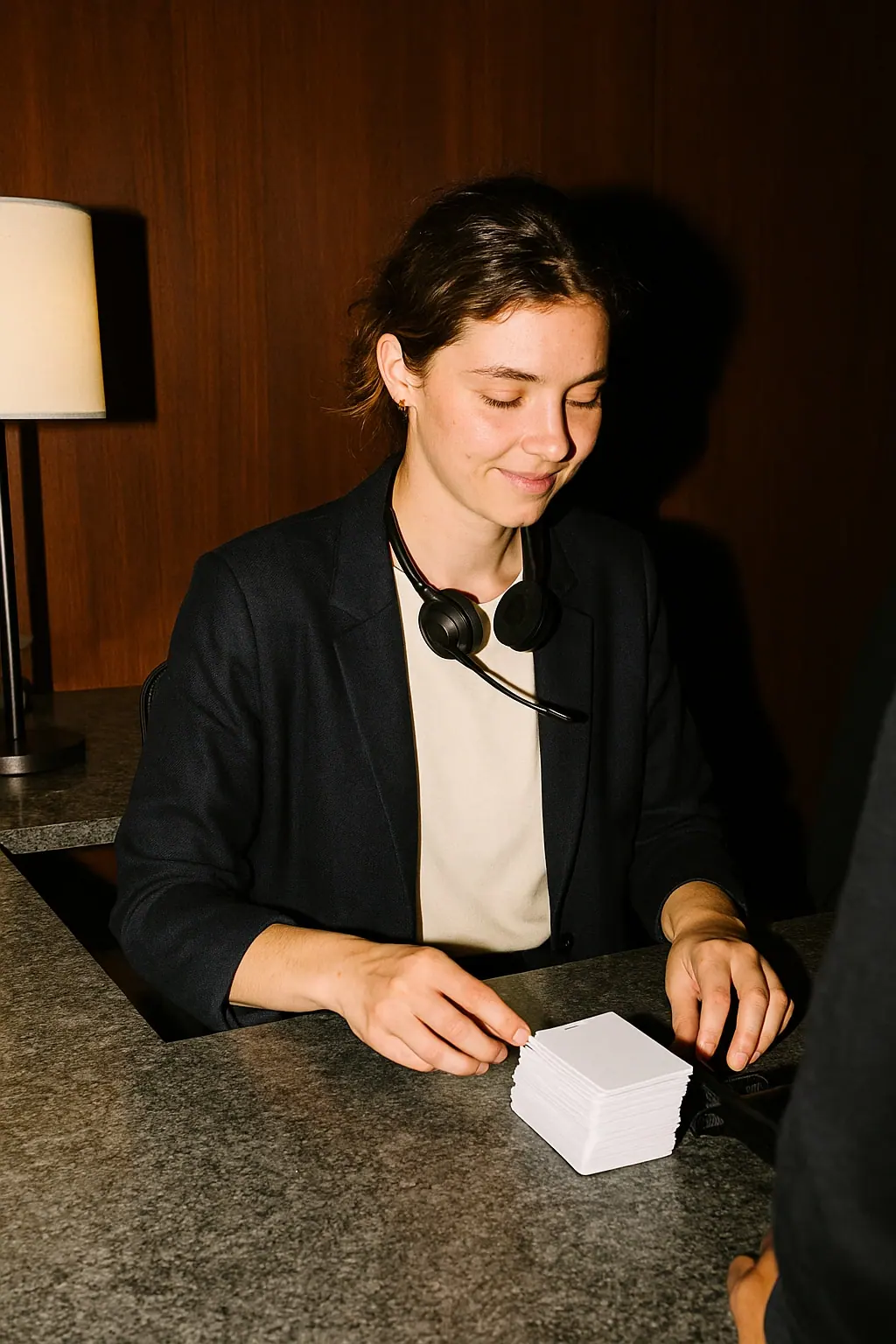
Corporate reception
The desk at a head office or professional firm, seen seated and standing against the lobby finishes. Formal tailoring with a precise shoulder.
Jacket · Trousers or skirt · Dress · Shirt or blouse · Fine-gauge knit · Scarf, tie or neckwear
Client-floor hosts
Meeting suites, boardroom floors and client dining. The role moves constantly and serves at the table, so the wardrobe needs ease through the back.
Soft jacket or waistcoat · Trousers or skirt · Shirt or blouse · Knit layer · Apron where food is served · Belt or scarf

Venue front of house
Theatres, galleries, concert halls and conference centres: ticketing, ushering and welcome through long evenings. The uniform has to be found in a crowd.
Jacket or waistcoat · Trousers · Shirt or polo · Dress · Knitwear · Lightweight outerwear for door duty
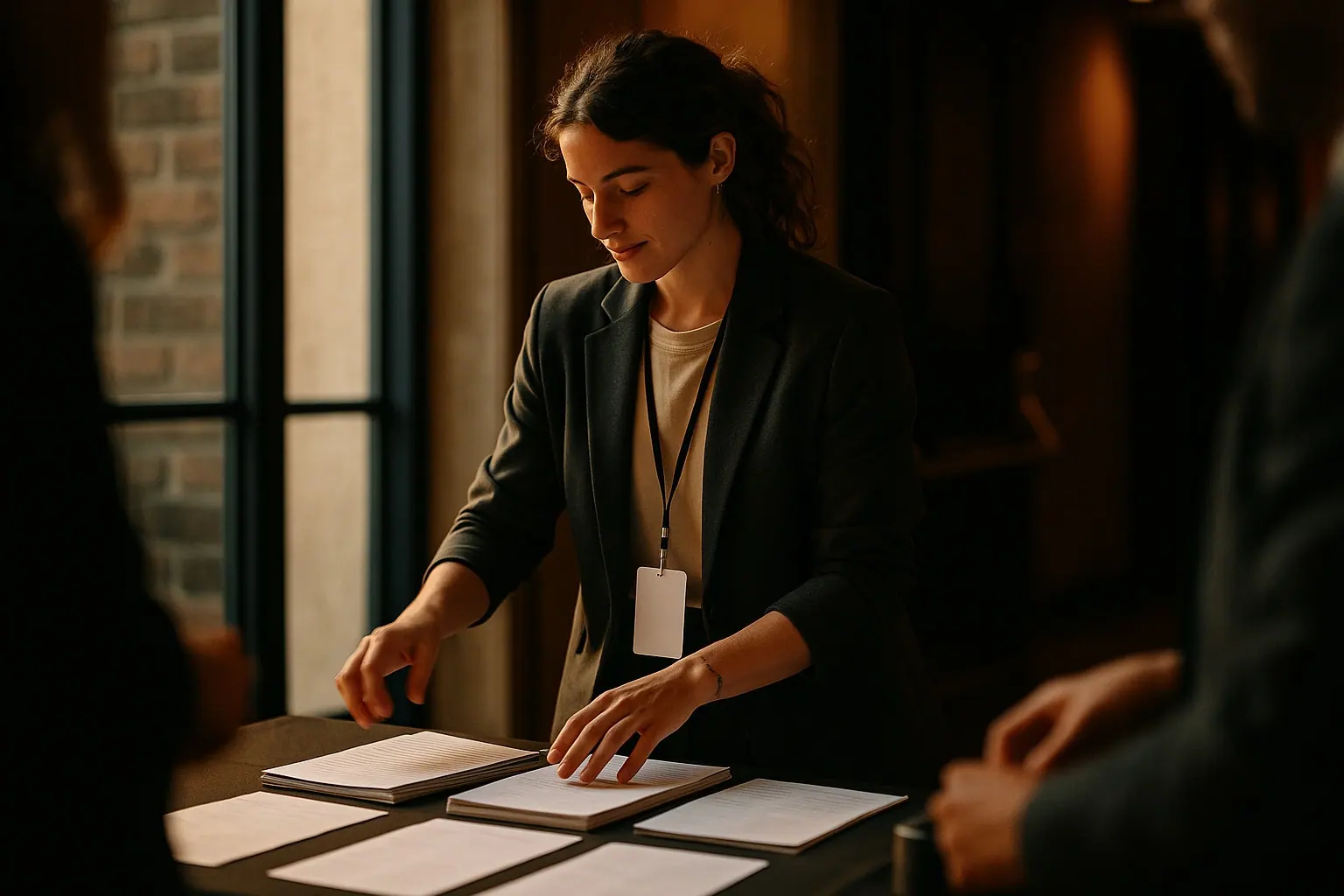
Events and guest services
Conferences, launches and match-day hospitality boxes. Short, intense days, often with a seasonal or sponsor-led piece on top of the base wardrobe.
Soft jacket · Trousers or skirt · Shirt or blouse · Knit polo · Apron or service waistcoat · Scarf or accent piece
Concierge and welcome desk
Door, lobby and welcome roles that sit alongside building security without being part of it. Tailored outerwear and a formal presence, apparel only.
Overcoat · Jacket · Waistcoat · Trousers · Shirt · Tie or neckwear


Developed as one wardrobe.
- Tailoring
- Jackets · Trousers · Skirts · Dresses · Waistcoats
- Shirting and knitwear
- Shirts · Blouses · Knit polos · Cardigans · Fine-gauge knits
- Outerwear
- Overcoats · Raincoats · Lightweight layers for door duty
- Accessories
- Scarves · Ties and neckwear · Aprons · Belts · Textile accessories
Operating conditions
Seated and standing
Reception tailoring is seen both ways. Jacket length, waist and sleeve are developed so the line holds behind a desk and when standing to greet.
Lobby climate and door duty
Lobbies are air-conditioned and doors are not. The wardrobe carries layers and outerwear for the same role, so a concierge in January and a receptionist in July share one look.
Formality by site
A head office, a members’ club and a stadium box ask for different registers. The programme moves between them with cloth, colour and detail.
Long shifts and changeovers
Venue and event teams carry, walk and reset rooms. Cloths are chosen for recovery and comfort through a long evening, and checked in sampling.
How a corporate and venue programme is structured
- 01
Roles, sites and registers
We map roles, sites and the formality each one needs against garments. The matrix becomes the shared document for facilities, brand and procurement.
- 02
Development and approval
Cloth, colour and construction are developed against the building’s finishes and your brand codes, and sampled on real pieces. Each stage closes with a clear approval before the next begins.
- 03
Production and new joiners
Production is planned by site and role, with the specification documented so orders for new joiners and new sites are produced to the same reference as the first.
The process, in short
Corporate and venue briefs often come through facilities, workplace or guest-experience teams rather than a design studio, so the first step is usually a short audit of what each role does across a day. Specialist manufacturing partners are selected for each garment category, while Role & Form remains accountable for the complete programme.
Each stage closes with a clear approval before the next begins.
The eight stages, from brief to deliveryQuestions corporate & venues buyers ask.
Can one wardrobe cover a head office, a members’ club and a stadium box?
Yes. The roles share a colour story, cloth family and construction language, and the register shifts by site: formal tailoring at the head office, a softer jacket on the client floor, a service waistcoat in the box.
We outsource our front of house. Who do you work with?
Whoever holds the brief. We can develop with the end client, with the front-of-house provider, or with both, as long as one party signs off each stage.
Do you supply security uniforms or equipment?
No. We develop apparel and textile accessories for concierge, door and welcome roles that work alongside security teams. Protective equipment, radios, badges and regulated security garments are outside our scope.
Can the venue wardrobe change for sponsors or seasons?
Yes. A sponsor scarf, an accent shirt or a seasonal waistcoat is built on the same cloth and colour logic as the base wardrobe. It goes on for the event and comes off again, and the base underneath still reads as one team.
Planning a reception, venue or event uniform programme?
Tell us about your roles, sites, approximate numbers per role and target date.
- We read it and ask what is missing.
- We propose a route and what to expect next.
- No mailing list, no automated follow-up sequence.